
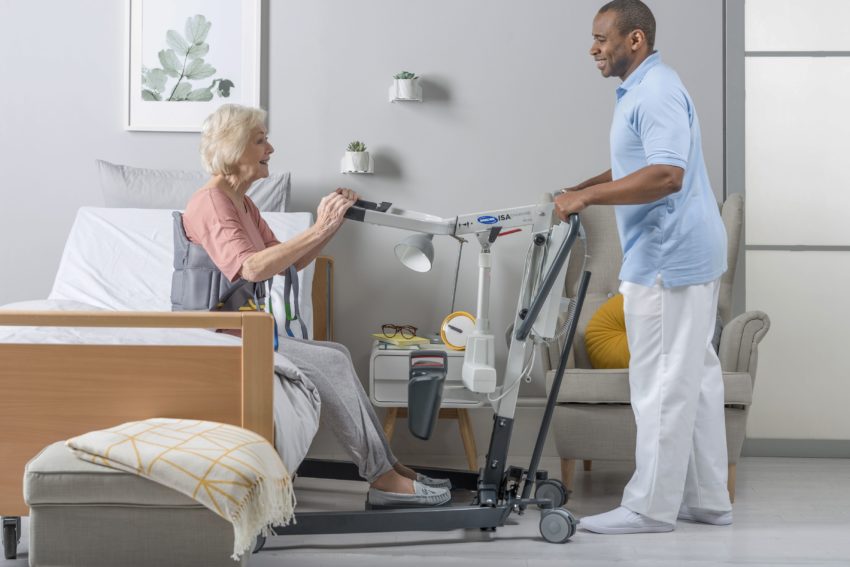
Caring for an ageing loved one or managing mobility issues at home often presents daily physical and emotional challenges. From moving between rooms to getting in and out of bed, once-routine tasks can become difficult or even dangerous. In these situations, hoists and transfer aids have proven to be transformative, not only in how care is delivered but in how individuals live day-to-day.
Restoring Dignity and Supporting Independence
A major emotional hurdle for those with reduced mobility is the loss of independence. Hoists and transfer aids, such as stand-assist hoists or transfer boards, allow users to regain control over their daily activities, whether that’s toileting, bathing, or repositioning in bed. Even partial independence can have a positive impact on confidence and mental wellbeing.
Rather than relying entirely on a carer for every movement, individuals are empowered to participate in their own routines. This shift is not just physical — it supports emotional wellbeing, allowing people to feel more in control of their day and less dependent on others for basic needs.
Reducing the Physical Burden on Carers
Many informal carers, often family members, are not trained for physically demanding tasks. Repeated lifting, turning, or repositioning of another person can lead to fatigue and injury. A systematic review published in the International Journal of Nursing Studies found that musculoskeletal injuries among aged care workers are most commonly associated with manual handling of people, along with the use—or lack—of assistive devices such as hoists and transfer aids.
By using the right equipment, carers can reduce the physical strain of daily tasks, while also improving safety and consistency in care delivery. In the long term, this helps prevent injury-related absences, carer burnout, and the need for emergency interventions due to improper handling techniques.
Enhancing the Standard of In-Home Care
At-home care can quickly become unsustainable without the right support. Hoists and transfer aids make it possible to provide a standard of care that’s typically associated with clinical or aged care facilities. This includes more hygienic handling, better comfort for the individual, and fewer disruptions to routines.
Equipment such as portable hoists, sit-to-stand transfer devices, ceiling-mounted systems, and sliding sheets is commonly used to improve mobility and safety during routine care. These solutions, as seen in a wide range of patient care and mobility aids from Safety and Mobility, are designed specifically for home environments while meeting professional care standards. Having dependable, fit-for-purpose equipment helps carers deliver effective support and reduces reliance on outside assistance.
Long-Term Benefits for Families and Loved Ones
Investing in appropriate mobility support doesn’t just help in the moment—it has lasting effects on a family’s ability to manage care at home. With the right aids in place, it’s often possible to postpone or avoid transitions into residential aged care. This enables loved ones to remain in familiar surroundings longer, preserving routine, personal comfort, and social connections.
Families also benefit financially. Though there is an upfront cost to equipment, it often offsets the need for constant professional care or medical interventions related to falls and injuries. Over time, this can reduce the strain on both emotional and financial resources, allowing families to focus more on quality of life and less on logistical challenges.
A Safer, Dignified Future Starts at Home
Hoists and transfer aids are far more than medical tools—they are enablers of safety, dignity, and quality of life. Whether for an older adult looking to retain independence or a carer seeking sustainable support, the right equipment can redefine the home care experience. With thoughtful use of these tools, homes can become places of healing, comfort, and confidence for everyone involved.