
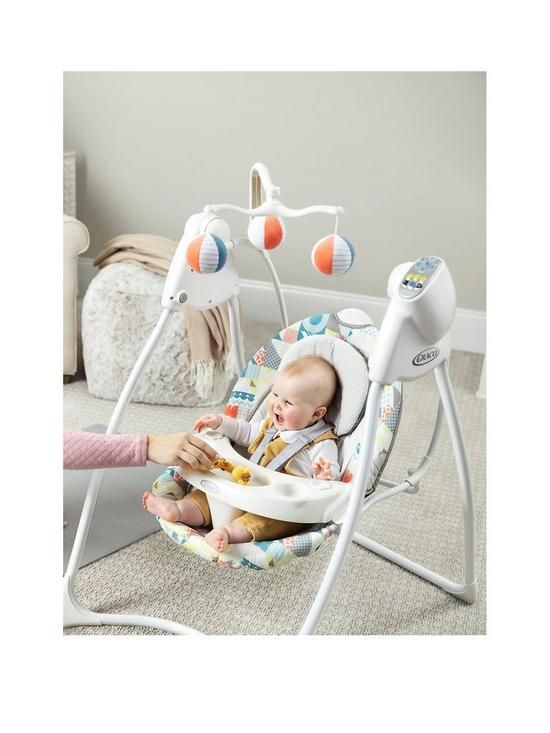
Introduction: How Baby Swings Fit into Infant Care
Caring for an infant involves learning which soothing methods work best for a baby’s individual needs. Some babies respond well to gentle rocking, quiet sounds, or close physical contact, while others may need a different approach. A baby swing is one option caregivers may consider when looking for ways to comfort an awake, fussy infant.
Although swings can provide gentle movement, they are not essential for every family, and their effectiveness varies from baby to baby. Understanding how a baby swing works, what features to consider, and how to use one safely can help caregivers make informed decisions without relying on equipment as a substitute for responsive care.
Understanding Different Types of Baby Swings
Baby swings are designed to provide controlled movement while supporting an infant in a seat. Depending on the model, the movement may be side to side, front to back, or another pattern specified by the manufacturer. Some swings require a caregiver to initiate the movement, while electric models use a motor.
When comparing different designs, caregivers may encounter several common features:
- Movement settings: Some models offer multiple speeds or movement patterns. A baby may prefer one type of movement over another, but no setting is guaranteed to calm every infant.
- Seat adjustments: Certain swings allow the seat position or other settings to be adjusted. These adjustments should always follow the manufacturer’s instructions.
- Portability: Compact designs may be easier to store or move between suitable locations. Portability should never come at the expense of stability during use.
- Cleaning requirements: Removable covers and clearly stated care instructions can make routine cleaning more manageable.
- Space and setup: A swing should fit securely in the intended area, on a stable, level floor and away from nearby hazards.
The number of features is less important than whether a swing is appropriate for the infant’s current developmental stage and can be used according to its instructions. Caregivers should check the manufacturer’s stated age, weight, and developmental limits before introducing a swing.
Potential Benefits and Limitations of Baby Swings
Gentle movement may help some infants settle when they are awake and supervised. For caregivers, a swing may also provide a short opportunity to complete a nearby task while keeping the baby within view. However, babies differ in their responses: some appear comfortable with swinging, while others may become unsettled or prefer being held.
A swing should not be viewed as a universal solution for crying. Fussiness can have many causes, including hunger, tiredness, a wet diaper, overstimulation, or physical discomfort. Using a swing does not replace checking a baby’s needs, offering comfort, or responding to signs of illness.
Other soothing techniques may be equally useful, depending on the infant:
- Gentle rocking in a caregiver’s arms: Close contact and slow movement may provide reassurance.
- Speaking or singing softly: A familiar voice can help create a calm environment.
- Checking basic needs: Feeding cues, diaper changes, and temperature comfort are important considerations.
- Reducing stimulation: Dimming bright lights or reducing background noise may help some babies settle.
- Maintaining a flexible routine: Predictable patterns around feeding, interaction, and rest can help caregivers recognize their baby’s cues.
If crying is persistent, unusual, or accompanied by concerning symptoms, caregivers should not assume that more swinging will solve the problem. A pediatrician can help assess potential causes and recommend appropriate care.
Choosing a Baby Swing and Using It Safely
When considering an infant swing, prioritize safe design, developmental suitability, and clear operating instructions. Caregivers should understand how the restraint system works, how the swing must be assembled, and when the manufacturer requires use to stop.
For families exploring powered options, an electric baby swing is one example of the type of equipment available. Specific features and operating limits vary by model, so the manufacturer’s product information should be checked rather than assuming that all electric swings work in the same way.
Follow these general precautions whenever using a baby swing:
- Supervise the baby continuously. A swing is not a place to leave an infant unattended.
- Use the restraint system as directed. Secure the baby according to the manufacturer’s instructions and never modify the harness.
- Choose a safe location. Place the swing on a stable, level floor, away from stairs, furniture edges, cords, and other hazards.
- Follow developmental limits. Some swings must no longer be used once a baby reaches a specified weight, age, or milestone, such as rolling over. Check the exact requirements for the model.
- Keep the seat free of loose items. Do not add pillows, blankets, toys, or unapproved accessories.
- Use the swing only as intended. Do not modify the equipment or use it in a way that conflicts with the manufacturer’s instructions.
Baby Swings Are Not Safe Sleep Spaces
One of the most important safety considerations is sleep. Baby swings are not designed to be routine sleep spaces, even if a baby appears comfortable or the seat can be reclined.
If an infant falls asleep in a swing, caregivers should move the baby to an appropriate sleep surface as soon as practical. The recommended surface is firm, flat, and noninclined, with the baby placed on their back. A swing should not be used for overnight sleep or planned naps, and changing the seat angle does not make it a safe sleep environment.
A swing should also not be relied on to treat reflux, colic, breathing difficulties, or other medical conditions. If an infant seems uncomfortable in the swing or caregivers have concerns about persistent crying, feeding, reflux symptoms, or development, they should seek advice from a pediatrician.
Conclusion: Making Informed Choices for Infant Comfort
A baby swing may be a helpful option for some families when soothing an awake infant under continuous supervision. Understanding the available designs, checking developmental suitability, and following the manufacturer’s safety instructions are essential steps when deciding whether to use one.
Ultimately, no piece of equipment replaces attentive caregiving or safe sleep practices. Caregivers can choose from several soothing methods and adjust their approach to their baby’s individual cues, keeping safety, comfort, and responsive care at the center of every decision.