
An echo test, also known as an echocardiogram, is a non-invasive medical imaging procedure that uses sound waves to produce images of the heart. It is widely used to diagnose a variety of heart conditions, evaluate heart function, and monitor the progress of existing conditions.
In this article, we’ll explore the different types of echo tests, their uses, the benefits they provide, and how they help healthcare providers make accurate diagnoses in Australia.
What is an Echo Test?
An echo test uses high-frequency sound waves (ultrasound) to create detailed images of the heart. The procedure is safe and non-invasive, providing real-time visualisation of the heart’s structure, blood flow, and functioning.
During the test, a small device called a transducer is placed on the chest, which emits sound waves and receives the echoes reflected from the heart. These sound waves are then converted into images on a screen, allowing doctors to assess the heart’s condition.
How an Echo Test Works
An echo test typically involves the following steps:
- A gel is applied to the chest to help the transducer make good contact with the skin.
- The transducer is moved around the chest to capture various angles of the heart.
- The heart’s movement, blood flow, and valve function are measured.
- The images are displayed on a monitor for the healthcare provider to analyse.
- The test can take anywhere from 30 minutes to an hour, depending on the type of echo test being performed.
Types of Echo Tests
Several types of echo tests are available, each serving a specific purpose. Understanding these types can help patients and healthcare providers select the most appropriate test based on the condition being evaluated.
Transthoracic Echocardiogram (TTE)
The transthoracic echocardiogram (TTE) is the most common and standard echo test. In this procedure, the transducer is placed on the chest to capture images of the heart. TTE provides clear and high-resolution images of the heart’s chambers, valves, and blood flow.
It is primarily used to assess heart conditions such as heart murmurs, valve problems, heart failure, and congenital heart disease.
Transesophageal Echocardiogram (TEE)
A transesophageal echocardiogram (TEE) is a more specialised echo test that provides clearer and more detailed images of the heart. Unlike TTE, which uses external sound waves, TEE involves inserting a probe into the esophagus, located directly behind the heart.
This allows for closer visualisation of the heart’s structure, especially the valves and atria. TEE is often recommended when the images from a TTE are not clear enough or when a more detailed view is necessary.
Stress Echocardiogram
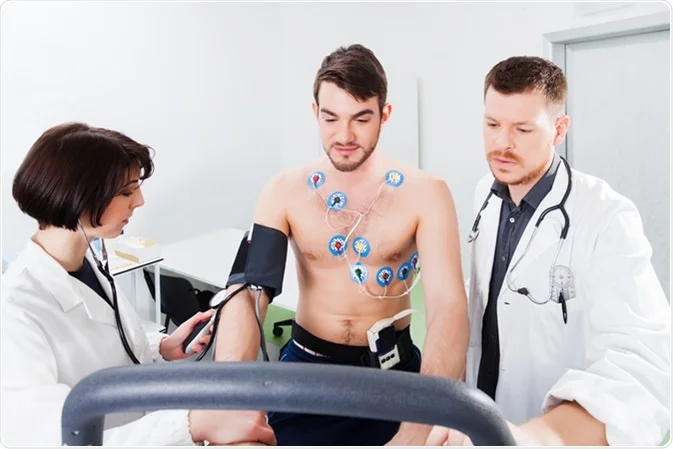
A stress echocardiogram combines an echo test with a physical stress test, typically performed on a treadmill or stationary bike. The goal of the test is to evaluate how the heart functions under physical stress. It is used to detect coronary artery disease, heart failure, and arrhythmias that may not be noticeable while the patient is at rest.
During the test, the echo test is performed before and immediately after exercise, comparing the heart’s performance under both conditions.
Fetal Echocardiogram
A fetal echocardiogram is a type of echo test performed on pregnant women to evaluate the heart of the developing baby. This test is typically performed between the 18th and 24th week of pregnancy and helps identify congenital heart defects, abnormal blood flow, and structural abnormalities in the fetal heart.
It is a crucial tool for diagnosing heart conditions early, allowing doctors to plan for any necessary interventions after birth.
Doppler Echocardiogram
A Doppler echocardiogram is a specialised echo test used to measure the blood flow through the heart and blood vessels. It helps identify issues such as heart valve defects, blocked arteries, and irregular blood flow.
This test uses the Doppler effect, which detects changes in the frequency of sound waves as they bounce off moving blood cells, providing information on the speed and direction of blood flow.
Uses of Echo Tests
An echo test is an essential diagnostic tool for a variety of heart conditions. Below are some of the key uses of an echo test in medical practice:
Diagnosis of Heart Conditions
Echo tests are primarily used to diagnose various heart conditions. Common conditions that can be detected through an echo test include:
- Heart Valve Disorders: Problems with the heart’s valves, such as stenosis (narrowing) or regurgitation (leakage), can be evaluated through an echo test.
- Heart Failure: An echo test can assess the heart’s ability to pump blood, helping to diagnose and monitor heart failure.
- Cardiomyopathy: This condition, which involves thickening or weakening of the heart muscle, can be detected through a transthoracic or transesophageal echo.
- Congenital Heart Defects: Echo tests are frequently used to diagnose congenital disabilities, including holes in the heart or abnormal blood flow patterns.
- Pericardial Effusion: An echo test can detect fluid buildup around the heart, which may indicate infection or other underlying health issues.
Monitoring Heart Health
For patients with known heart conditions in Australia, an echo test can be used regularly to monitor the heart’s function and detect any changes in heart health. This is especially important for patients with heart disease, those who have undergone heart surgery, or those receiving treatment for conditions like high blood pressure or heart failure.
Assessing Blood Flow and Cardiac Function
An echo test is crucial for assessing blood flow and how well the heart is pumping. The Doppler technique used in some echo tests helps healthcare providers evaluate the efficiency of blood flow through the heart and vessels.
This can reveal conditions such as aortic aneurysms, arterial blockages, and abnormal heart rhythms.
Benefits of Echo Tests
An echo test offers a range of benefits, making it an invaluable tool in cardiology and overall healthcare. Here are some key benefits of echo tests:
Non-Invasive and Safe
One of the main benefits of an echo test is that it is non-invasive, meaning no surgery or insertion of instruments into the body is required. This makes it a safer alternative to more invasive diagnostic procedures like angiography or cardiac catheterisation. Furthermore, there are no known harmful effects, making it a risk-free option for patients.
Accurate Diagnosis
Echo tests provide highly accurate images of the heart, allowing healthcare providers to detect a wide range of heart conditions. These tests are instrumental in diagnosing conditions that may not be visible through other imaging techniques, such as X-rays or CT scans.
Real-Time Results
Another advantage of echo tests is that they provide real-time images of the heart in motion. This allows doctors to observe how the heart functions during normal activities or stress, which can be crucial for detecting problems that may not be evident at rest.
The ability to monitor the heart’s performance under various conditions provides valuable insights into its overall health.
Versatility
An echo test is a versatile diagnostic tool that can be used in a variety of settings, from routine checkups to emergency care. It is suitable for patients of all ages, including infants and pregnant women, making it an essential part of cardiovascular healthcare.
Additionally, echo tests can be used in conjunction with other diagnostic tests, providing a comprehensive assessment of the heart.
Interpreting Echo Test Results
Once the echo test is completed, the results are analysed by a cardiologist or trained healthcare provider. The doctor will look for specific markers such as:
- Abnormal blood flow or heart valve function
- Signs of heart enlargement or muscle damage
- Fluid buildup around the heart
- Abnormalities in the heart’s structure, such as holes or thickening of the walls
Conclusion
An echo test is a vital diagnostic tool that helps detect, monitor, and treat a variety of heart conditions. Providing detailed, real-time images of the heart allows healthcare providers to make more accurate diagnoses and develop effective treatment plans.
Whether for routine checkups, monitoring existing heart conditions, or diagnosing new issues, echo tests are essential in ensuring optimal heart health and improving overall well-being.