If you’ve ever stood in a baby store (or scrolled a registry checklist at 11 p.m.) wondering what you actually need, you’re not alone. The baby industry thrives on convincing new parents that every gadget is essential. The truth? Most of it gets used for six weeks and then collects dust. But a small handful of items earn their keep from the day you pack your hospital bag all the way through your baby’s first birthday — and often well beyond.
This guide breaks down the baby essentials that go the distance, organized by how they evolve with your baby across the first year.
What Makes a Baby Item “Go the Distance”?
Before we get into specifics, here’s the simple test we used for every item on this list:
- Multi-stage usefulness — It serves a purpose at newborn, infant, and toddler stages (even if that purpose changes).
- Durability — It survives hundreds of wash cycles, spit-up incidents, and diaper blowouts.
- Everyday frequency — You reach for it daily or weekly, not once a season.
An item only needs to check two of the three boxes to make the cut. Here’s what passed.
1. Muslin Swaddle Blankets: The Undisputed Workhorse
No single item transforms its job description more times in twelve months than a quality muslin swaddle blanket.
- Weeks 0–8: Classic swaddling to soothe the startle reflex and encourage longer sleep stretches.
- Months 2–6: Nursing cover, stroller shade, burp cloth, and impromptu changing mat.
- Months 6–12: Play mat layer, high chair wipe-down cloth, and lightweight blanket for car naps.
- Year one and beyond: The “lovey” your toddler refuses to sleep without.
Quality matters more here than almost anywhere else on this list because swaddles get washed constantly. Look for pre-washed, breathable cotton muslin that softens with every cycle instead of pilling. Parents consistently report that these Crane Baby swaddles hold their softness and shape after a full year of near-daily washing, which is exactly the kind of durability that separates a keepsake from a rag.
Pro tip: Buy at least three. One in the crib, one in the diaper bag, one in the wash — always.
2. A Convertible Car Seat (or a Smart Infant Seat Strategy)
Your baby legally cannot leave the hospital without a baby car seat, making it the first purchase that literally goes from hospital bag day onward. You have two smart paths:
- Infant seat + convertible later: The clickable infant seat is unbeatable for the newborn months (never wake a sleeping baby), then transition to a convertible seat around 9–12 months.
- Convertible from day one: Many convertible seats now accommodate newborns as small as 4–5 pounds, saving you an entire purchase.
Either way, the car seat is a first-year constant — and a place where buying new (not secondhand) is the safest call due to expiration dates and unknown crash history.
3. A Sound Machine
The hospital nursery is surprisingly loud, and your baby spent nine months listening to the whoosh of your bloodstream.
Silence is actually unfamiliar to newborns. A white noise machine:
- Helps newborns settle in weeks 1–12
- Masks household noise during the 2–3–4 nap-schedule months
- Becomes a permanent sleep cue that travels with you through toddlerhood
Choose one with continuous play (not a 45-minute timer) and a portable option for travel.
4. Zip-Front Sleepers in Multiple Sizes
Snaps are a hazing ritual. At 3 a.m., a two-way zipper is the difference between a 90-second diaper change and a full wake-up. Zip-front sleepers work from the newborn footie stage through 12-month sizes, and buying a size band up front (newborn, 0–3, 3–6, 6–9, 9–12) means you’re never caught off guard by a growth spurt.
5. A Quality Baby Carrier
Babywearing solves problems at every stage:
- Newborn: Contact naps that free up your hands
- 4–8 months: Errands without wrestling a stroller
- 9–12 months: Hip carries for a curious baby who wants to see everything
Look for a carrier rated for 7-30+ pounds with multiple carry positions, so one purchase covers the full year.
6. A Play Gym That Converts
The best play gyms are designed in stages: overhead toys for the newborn batting phase, tummy-time props for months 3–6, and a sitting-play station once your baby is upright. Some convert into ball pits or activity tables for the toddler years: one footprint, twelve-plus months of use.
7. The Boring-But-Critical Trio
These three never make the cute registry photos, but they’re in service every single day of year one:
- Burp cloths (8–10): Spit-up doesn’t end until solids are well established.
- A hands-free thermometer: From newborn fevers to first-birthday teething, you’ll use it more than you think.
- Diaper cream with zinc oxide: Blowouts, teething-related rashes, and new-food reactions all happen on their own schedule.
What Doesn’t Go the Distance (Skip or Borrow These)
To keep your budget focused on the long-haul items above, consider borrowing or buying secondhand:
- Bassinet: Used roughly 3–5 months, then done.
- Newborn-size clothing hauls: Many babies size out in 2–4 weeks.
- Wipe warmers, bottle sterilizers, and single-purpose gadgets: Nice-to-haves that most parents abandon by month three.
- Fancy newborn shoes: Babies don’t walk. Enough said.
FAQ: First-Year Baby Essentials
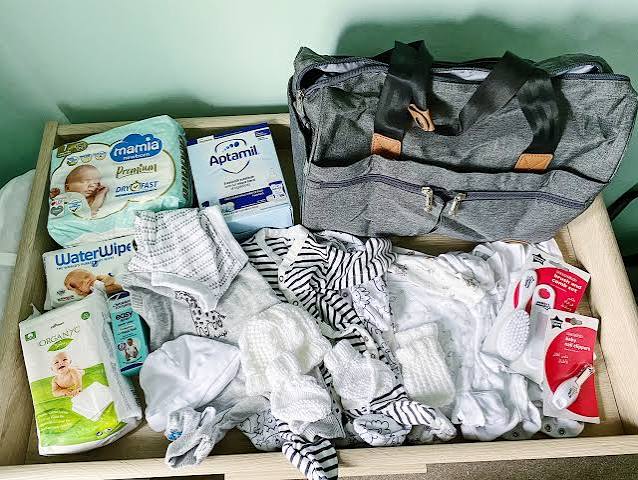
What should actually be in my hospital bag for the baby? Keep it minimal: one going-home outfit in newborn and 0–3 month sizes, a lightweight swaddle blanket, and the installed car seat waiting in your vehicle. The hospital provides diapers, wipes, and hats.
How many swaddle blankets do I really need? Three to four is the sweet spot for most families — enough to rotate through washes without buying a stack that never gets used.
When should I stop swaddling my baby? Stop swaddling as soon as your baby shows signs of rolling, typically between 8 weeks and 4 months. The blankets themselves keep working for years afterward in their non-swaddle roles.
Is it worth buying a convertible car seat instead of an infant seat? If budget is tight, yes — a newborn-compatible convertible seat covers years of use with one purchase. If convenience matters more (frequent car transfers, a sleeping newborn), the infant seat’s portability justifies its cost for the first 9–12 months.
What’s the most overrated baby registry item? Consistently, parents name wipe warmers, designer diaper bags, and elaborate newborn wardrobes as the items they’d skip the second time around.
The first year of parenthood moves fast — your baby will triple their birth weight, learn to sit, crawl, maybe even walk, all before that first smash cake. The gear that keeps up is the gear designed to change jobs as your baby changes: a swaddle that becomes a lovey, a car seat that grows with them, a carrier that adapts from newborn snuggles to toddler hip rides.
Buy fewer things. Buy the right things. And save the money you would’ve spent on gadgets for the truly essential first-year expense: coffee.